The 2022 Rockstar Data Breach: Full Timeline and Aftermath
A detailed timeline of the September 2022 Rockstar Games breach that leaked early GTA VI footage - the attacker, the response, the legal aftermath, and the long-term implications for the franchise.
The Most Significant Pre-Release Leak in Gaming History
On the evening of September 18, 2022, an account named "teapotuberhacker" began posting video clips to the GTAForums community and, separately, to 4chan. The clips - roughly 90 in total - showed in-development footage of a game that had never been publicly acknowledged: Grand Theft Auto VI. This is the most detailed available timeline of the breach, its public handling, and its long-term consequences for Rockstar and the franchise.
All factual claims here are supported by publicly available reporting from Bloomberg [1], Kotaku [2], The Verge, IGN, and court documents filed after the attacker's arrest.
The Buildup
Rockstar had not officially acknowledged GTA VI's existence prior to the breach. The company's parent, Take-Two Interactive, had referenced "groundbreaking" upcoming titles on investor calls [3], and Jason Schreier at Bloomberg had reported on the game's development restart in July 2022. The July Schreier piece described a reworked development process intended to avoid the crunch associated with RDR2, a Vice City setting, and a dual-protagonist structure with a female lead.
September 18, 2022: The Leak
Late on September 18, clips began appearing on GTAForums' long-running GTA VI speculation thread. The account responsible, "teapotuberhacker," claimed to have obtained the footage by compromising internal Rockstar infrastructure. The clips depicted:
- Pre-production gameplay of characters clearly identified as Lucia and Jason.
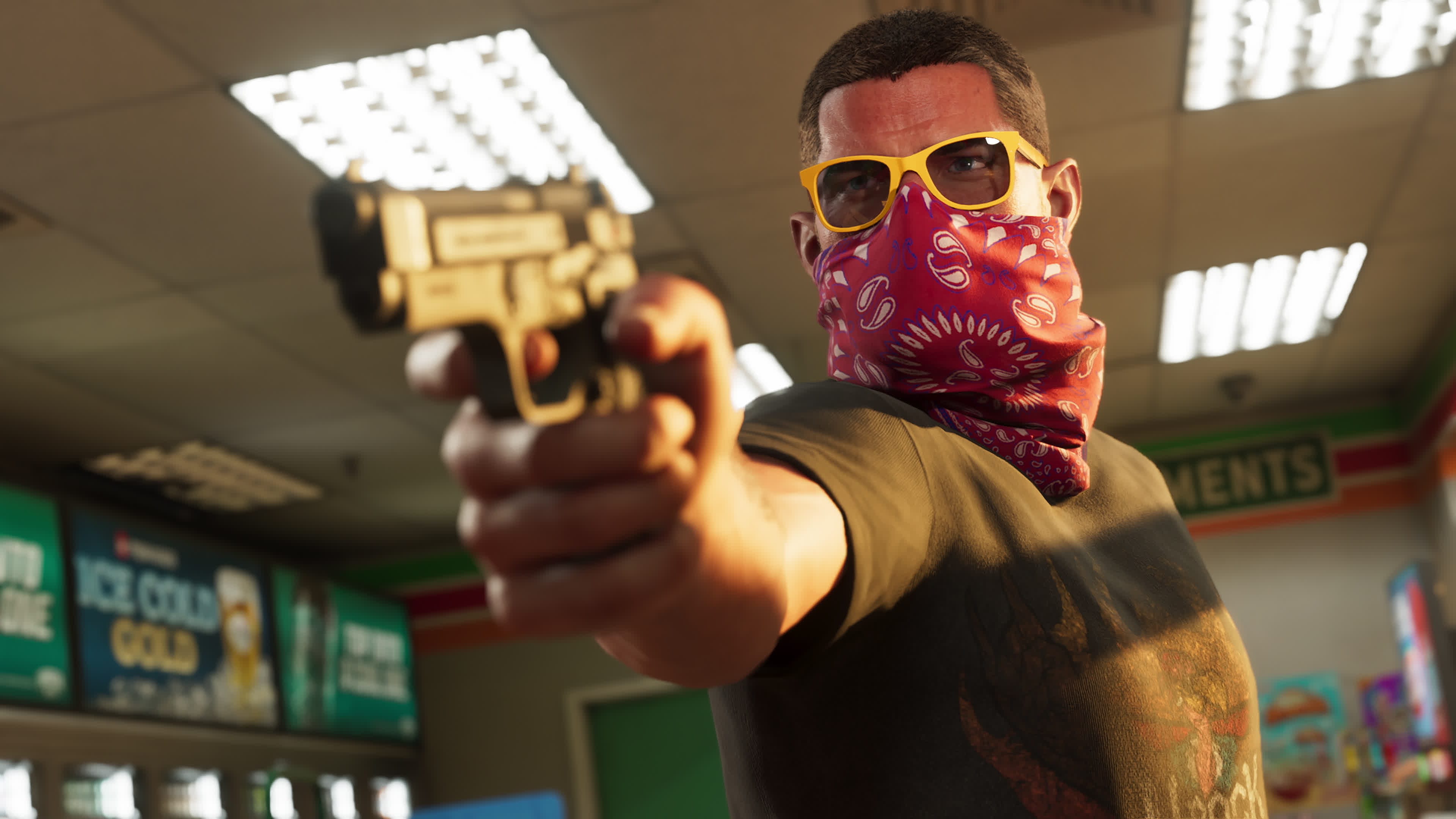
- A diner-robbery sequence closely resembling what would later appear in Trailer 1.
- Miami-style urban environments rendered in a development-version state.
- Interior and exterior work-in-progress sequences with obvious placeholder assets.
The footage spread rapidly. Within hours, mirrors had been posted across Reddit, Twitter (now X), YouTube, and Discord servers. Rockstar filed DMCA takedowns on the largest mirrors, but the footage was widely redistributed.
September 19, 2022: Bloomberg and Rockstar's Statement
Jason Schreier's Bloomberg piece, published September 19 [1], was the first major mainstream-press coverage. It confirmed Rockstar's internal assessment of the breach as significant and reported that source code may also have been exposed.
Later that day, Rockstar posted a short statement via Twitter and its Newswire [4]:
"We recently suffered a network intrusion in which an unauthorized third party illegally accessed and downloaded confidential information from our systems, including early development footage for the next Grand Theft Auto. ... We do not anticipate any disruption to our live game services nor any long-term effect on the development of our ongoing projects."
This was the first time Rockstar had publicly acknowledged that a new Grand Theft Auto was in development.
September 20-25, 2022: Follow-on Coverage
Major outlets ran substantial follow-ups:
- Kotaku's coverage emphasized the moral ambiguity of watching and sharing the leaked footage [2].
- The Verge covered the technical questions about how the intrusion had happened.
- IGN and PC Gamer emphasized community reactions and the fandom's divided response.
The community reaction itself was mixed. Many fans refused to watch the clips out of respect for the developers; others defended leaked-content viewing as a normalized part of modern fan culture. This divide persists to some extent even now.
The Attacker: Arion Kurtaj and Lapsus$
Attribution was not immediate, but reporting and subsequent UK court documents identified the attacker as Arion Kurtaj, an 18-year-old UK national and member of the Lapsus$ hacking collective [5]. Lapsus$ had, in 2022, also compromised Nvidia, Samsung, Microsoft, and Uber in a sequence of social-engineering-driven intrusions.
Kurtaj had reportedly been on bail in connection with an earlier Lapsus$ matter at the time of the Rockstar intrusion. He used an Amazon Fire TV stick and a hotel TV reportedly because his primary equipment had been seized. The intrusion appears to have combined social-engineering access to Rockstar's internal Slack workspace with subsequent lateral movement.
Legal Outcome
Kurtaj's case went to trial in the United Kingdom in 2023. He was found by a jury to have committed the offenses but was found unfit to stand trial in the conventional sense. In December 2023 he was sentenced to an indefinite hospital order under the UK Mental Health Act [5]. The sentencing reportedly reflected the judge's assessment that Kurtaj continued to pose a risk of reoffending.
Rockstar's Remediation
Rockstar's public-facing response beyond the initial statement was minimal. Internally, reporting suggests substantial changes, including:
- Tightened access controls across internal development systems.
- Changes to Slack and internal messaging security configurations.
- A reassessment of which employees had access to pre-release gameplay footage.
- Acceleration of the legal and DMCA response apparatus for future leaks.
The September 2022 breach effectively set a new standard in the industry for how leaks are handled. The Rockstar Newswire response - short, factual, not defensive - became a template cited in other incident responses.
Longer-Term Consequences
Fan Culture
The breach accelerated community knowledge about GTA VI by roughly a year. By the time Trailer 1 released in December 2023, much of the fandom already knew the Vice City setting, the dual-protagonist structure, and the female-lead framing. This shifted the reception of Trailer 1 from discovery to confirmation.
Rockstar's Trust Calculus
Rockstar had historically operated on an extreme secrecy model. The breach tested that model publicly and, arguably, vindicated it: the secrecy had not prevented the leak, but the response demonstrated that a leak did not meaningfully harm the project. Rockstar's subsequent marketing (see the Marketing Campaign Analysis guide) has leaned even harder into deliberate silence as a result.
Industry Security Culture
The 2022 AAA breach cluster (Rockstar, EA, Nvidia, Microsoft, Uber, Samsung) pushed the publisher-side security community to adopt substantially more rigorous access controls. The Slack-compromise vector in particular became a case study referenced in industry security conferences through 2023-2024.
The Source Code Question
Reporting at the time suggested portions of GTA V source code may also have been exposed, though the full scope was never publicly confirmed by Rockstar. Subsequent years saw increased modder-community capability around GTA V internals that some observers attributed partly to leaked material. This is contested; neither Rockstar nor independent security researchers have published a definitive analysis.
What the Breach Did Not Change
Despite the scale of the leak, the GTA VI project appears to have continued largely unchanged. Major narrative and structural elements visible in the leaked September 2022 footage - Vice City, dual protagonists, the diner robbery sequence - all appear in substantively similar form in the official 2023 and 2025 trailers. This supports Rockstar's original assessment that the leak would not cause "long-term effect on the development" of the game.
Cultural Significance
The 2022 breach is, by most measures, the most consequential pre-release leak in video game history. It:
- Forced the acknowledgement of a long-hidden project.
- Generated a year-plus of legal and community fallout.
- Contributed to substantial industry security practice changes.
- Became a reference case in both cybersecurity and games journalism.
It also served as a stress test for Rockstar's communications strategy, which emerged from the breach looking stronger than before. In retrospect, the calm, factual, non-defensive tone of the September 19 Newswire post was a quietly masterful piece of corporate communication.
Sources
- Schreier, Jason. "GTA 6 Leak Is a Nightmare for Rockstar and Take-Two." Bloomberg, September 19, 2022. Earlier reporting: "Take-Two's Rockstar Games Is Developing New 'Grand Theft Auto' Title." Bloomberg, July 27, 2022.
- Kotaku coverage of the Rockstar breach, September 19-23, 2022.
- Take-Two Interactive 10-K filings and quarterly earnings commentary, 2021-2022.
- Rockstar Games official Newswire statement, September 19, 2022.
- UK court reporting on the sentencing of Arion Kurtaj, December 2023, including coverage from BBC News and The Guardian.
All factual claims in this article are drawn from the cited sources. Interpretations of Rockstar's strategic response are the author's analysis.
See guide locations on the map
Track your progress, open evidence, and mark locations as discovered.
Open live map